
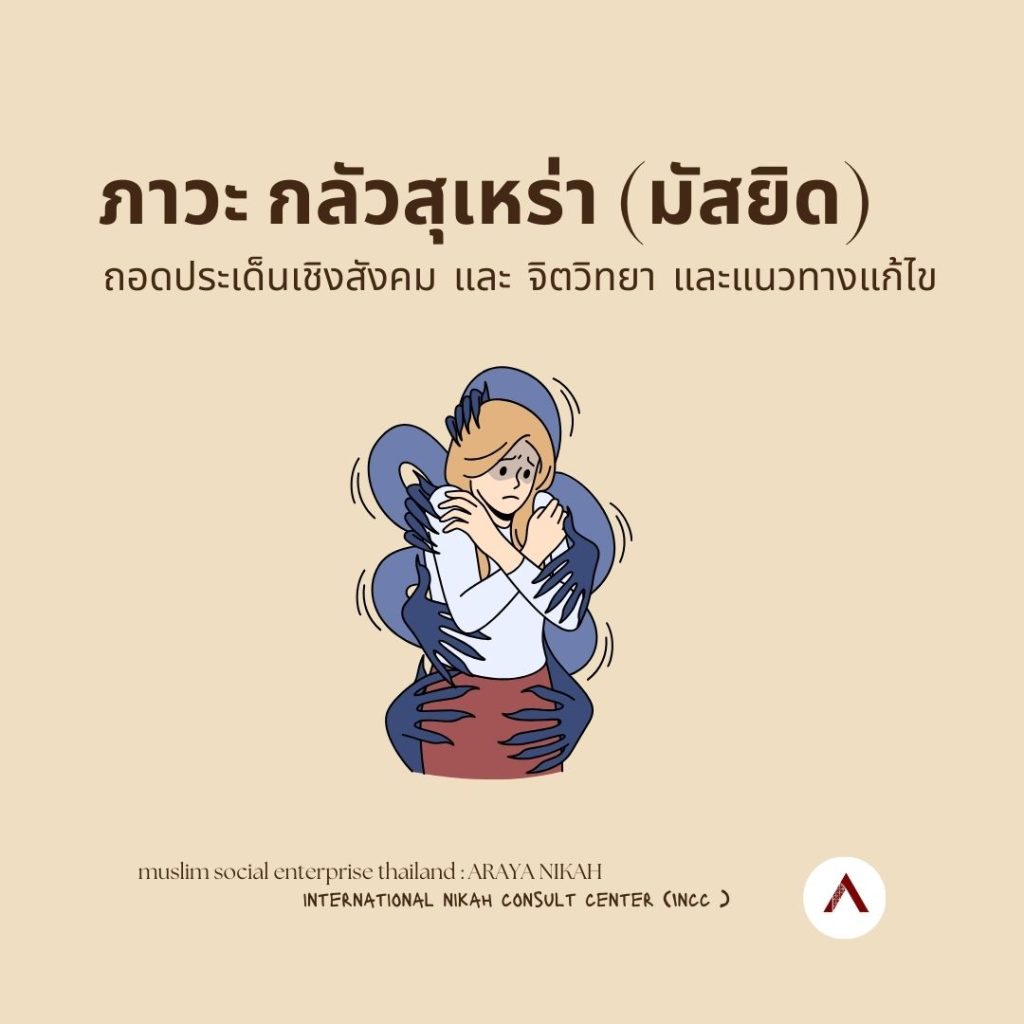
The mosque is an important center of the Muslim community for religious rituals and social activities. However, in some societies it is viewed with suspicion and prejudice. This misunderstanding causes fear and discomfort when people are required to participate in mosque activities. Often the problem may not originate from the participant themselves, but from the mosque’s own management issues or other social factors. This article studies the factors that give rise to mosque phobia, its impact on the community, and approaches to addressing it, drawing on research and examples of activities that help reduce fear and build understanding about the mosque.
Mosque phobia is real, and is a major factor driving people away from religion
Fear or discomfort in participating in mosque activities is a real phenomenon that causes some people to distance themselves from or leave Islam. Research by the Pew Research Center (2014) found that 55% of Muslims in the United States are concerned about being discriminated against or viewed negatively when participating in mosque activities. This concern causes some people to reduce their religious participation. A study by the Institute for Social Policy and Understanding (ISPU, 2017) states that 33% of American Muslims feel uncomfortable when having to participate in mosque activities due to fear of being judged and not accepted. These factors cause many people to distance themselves from the religious community.
There is nothing wrong with being afraid of the mosque: a new perspective to solve the problem
Fear of the mosque is not wrong, if we consider that this feeling arises from unfamiliarity, fear of being judged, or negative experiences in the past. Recognizing this feeling is the first step in solving the problem. Understanding the reasons why people feel afraid or uncomfortable when they have to participate in mosque activities will help adjust the way of welcoming and organizing activities to make them more accessible. This shift in perspective turns the mosque into a place that is open and appealing to people of all groups.
Factors that give rise to mosque phobia
Mosque phobia arises from many complex factors, including media, personal experiences, and misunderstandings about the role of the mosque in the community. These can be classified as follows:
- Negative image from the media
Research by Allen (2017) in Social Compass and Saeed (2007) found that the media plays a role in shaping society’s attitudes toward Islam, particularly by linking the mosque with violence and terrorism, causing those unfamiliar with Islam to develop fear and prejudice. Richardson (2004) states that linking Islam with terrorism in the media causes distrust of the Muslim community and the mosque as a whole. - Lack of understanding about the role of the mosque
A lack of knowledge about the role of the mosque in the community makes people feel alienated. Research by the Runnymede Trust (1997) discusses the concepts of an “open view” and a “closed view” of Islamophobia, pointing out that those with an open attitude will see the mosque as a cultural place, while those with a closed view will see the mosque as an inaccessible place. This lack of understanding thus leads to rejection of the mosque. - Negative experiences from interactions at the mosque
Unfriendly interactions at the mosque or negative experiences can lead to mosque phobia. Research by Allen (2017) points out that treating those unfamiliar with the mosque in a pressuring manner may cause them to avoid participating in religious activities at the mosque. Negative interactions take many forms, such as criticism, judgment, accusation, contempt, the use of power to bully and exclude, as well as difficulty in approaching people, corruption, and feelings of being divided by social class and discriminated against, which occur within the mosque space.
Impact of mosque phobia
- Impact on the Muslim community: Mosque phobia causes the Muslim community to feel alienated from wider society, lacking confidence in expressing their beliefs and religious rituals, which can affect cultural integration.
- Impact on interfaith relations: Research by Poynting & Mason (2007) points out that Islamophobia causes division between communities of different faiths, undermines trust, and increases conflict in society.
Approaches to reducing mosque phobia and panic
To create an open and welcoming atmosphere, approaches that can help reduce mosque phobia and panic include:
- Creating a warm and welcoming atmosphere
The mosque should have a friendly welcome and be clear about rituals and etiquette, which helps non-Muslims feel confident and safe. Providing easy-to-understand information helps reduce potential barriers and supports everyone’s participation. - Organizing culturally neutral activities that promote awareness
Organizing cultural activities and open-minded dialogues helps reduce prejudice and increase familiarity. For example, the Awareness Through Mosque Tour (ATMT) program, a collaboration between Haroon Mosque and Discover Islam Bahrain, gives non-Muslims a tour of the mosque, allowing them to learn the principles of Islam and the way of life of the Muslim community, reducing tension and promoting good acceptance. - Promoting understanding through Islamic art
Organizing Islamic art exhibitions and training in various art forms helps build understanding in a creative way. For example, the Institute of Islamic Art Thailand promotes the learning of Islamic art, allowing participants to gain in-depth knowledge of the Islamic artistic heritage. - Creating places to learn about Islam outside the mosque
Learning centers outside the mosque help reduce the pressure for those who are still unfamiliar with the religion to learn in an informal atmosphere, such as the Santichon Foundation and the ARAYA House (multicultural house), which open up space for interested people to learn and feel more comfortable before participating in activities at the mosque. - Promoting the development of Islamic scholars with communication skills and friendliness toward multiculturalism
Developing Islamic scholars to have communication skills that can reach and build understanding with people from diverse cultures is important. Scholars should be able to communicate with an open mind and honor people from different religious and cultural backgrounds, without judgment or prejudice. Practicing these skills helps reduce tension and build deep understanding. For example, the seminar “The Role of Muslim Media and Social Responsibility,” organized by the Office of the Chularajmontri, focused on making Muslim media aware of their social and ethical role, and also provided guidance on using media creatively to respond to the distortion of information or prejudice toward the Muslim community. Promoting the communication skills of scholars is therefore a key to building understanding and peace in a way that is open and embraces diversity.
ARAYA House: a place for initial learning and to promote connection with the mosque
ARAYA House is a space established to support non-Muslims or those who have distanced themselves from Islam in learning the basics of Islam in a non-pressuring atmosphere. It is a way to help reduce mosque phobia and promote understanding of Islam in a friendly manner. Those who are not yet confident about participating in mosque activities can start at ARAYA House to receive basic information and feel more comfortable, and when they are ready, ARAYA House will help coordinate to connect them back to the mosque for further in-depth learning. This support also includes accepting donations from various sectors so that ARAYA House can provide services to more interested people, promoting the learning of Islam in the Thai community in a sustainable and open manner.
Summary
Mosque phobia and panic when having to participate in mosque activities is a problem with psychological and social impacts. Approaches to reducing this prejudice include organizing neutral activities, promoting understanding through art, creating places to learn outside the mosque, and friendly mosque tours. These approaches help build understanding of Islamic culture and support a society that accepts and respects diversity.
References
- Allen, C. (2017). “Islamophobia and Social Compass.” Social Compass.
- Pew Research Center. (2014). Muslim Americans: No Signs of Growth in Alienation or Support for Extremism. Pew Research Center, Religion & Public Life.
- Institute for Social Policy and Understanding (ISPU). (2017). American Muslim Poll 2017: Muslims at the Crossroads.
- Poynting, S., & Mason, V. (2007). “The Resistible Rise of Islamophobia: Anti-Muslim Racism in the UK and Australia Before 11 September 2001.” Journal of Sociology, 43(1).
- Richardson, R. (2004). Islamophobia – Issues, Challenges and Action. Trentham Books.
- Runnymede Trust. (1997). Islamophobia: A Challenge for Us All. Runnymede Trust.
- Saeed, A. (2007). “Media, Racism and Islamophobia: The Representation of Islam and Muslims in the Media.” Sociology Compass.
Examples from various organizations
- Office of the Chularajmontri, Thailand
- Haroon Mosque, Bang Rak
- Islam-Interested Persons Program, Santichon Foundation
- ARAYA House, Social Enterprise, Thailand
- Institute of Islamic Art Thailand
You must be logged in to post a comment.