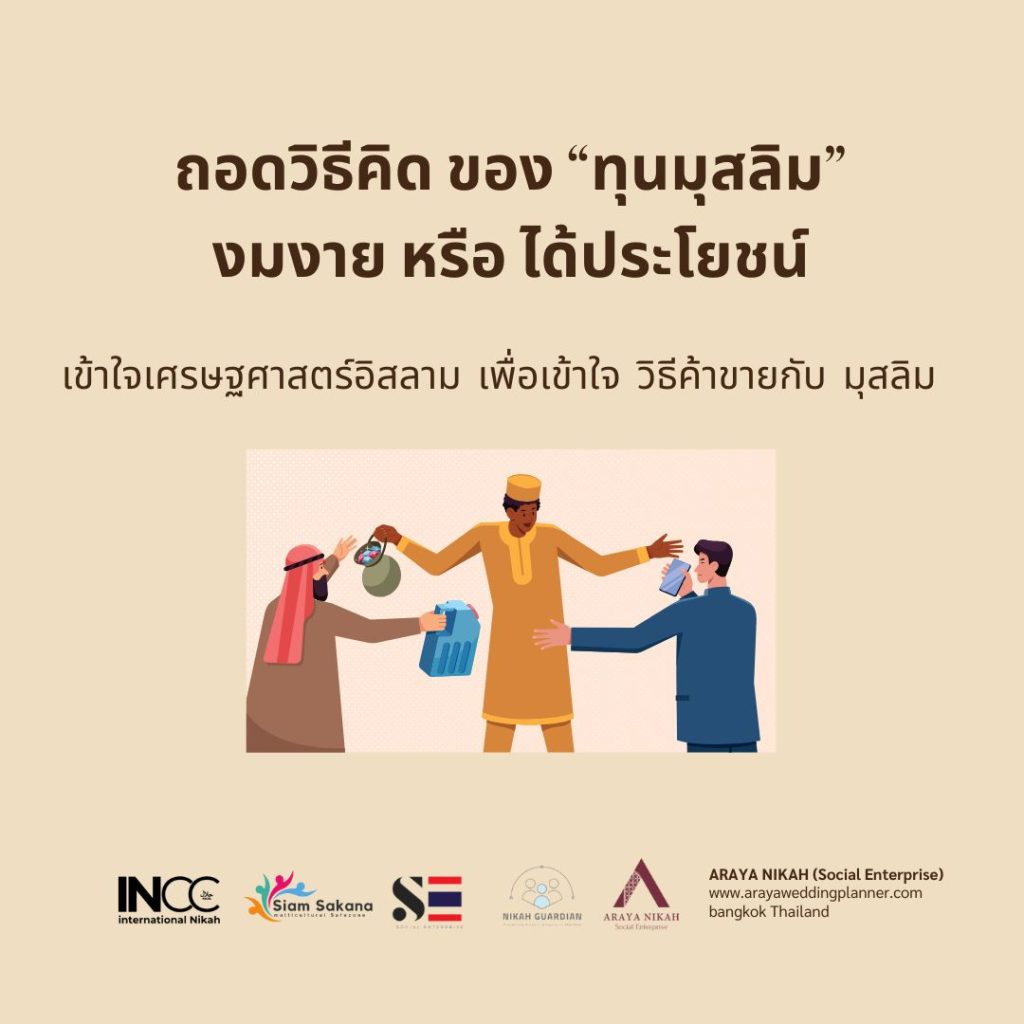
Property is something many people see as personal, a tool for accumulating wealth. But in the concept of “Muslim capital,” property does not truly belong to you — you are merely a custodian, responsible for passing it on so it creates the greatest benefit for society. This idea may sound like religious doctrine, but it carries value that the modern business world can apply in profound ways.
Property Is a Responsibility
In Islamic economics, all property belongs to God. Human beings are entrusted with using these resources to create shared benefit, not for personal accumulation. Destroying the environment, unjustly encroaching on others’ property, using property to create problems for society, failing to earn a livelihood to fulfill duties such as caring for one’s family and children, failing to settle property matters in divorce, failing to repay debts, and similar acts are therefore forbidden and considered sinful in Islam.
This concept aligns with the growing global interest in Sustainable Development. Viewing resources as something to be stewarded rather than owned can help businesses design policies aimed at creating long-term impact for communities.
A clear example is Patagonia, the American outdoor apparel company that channels most of its profits back into environmental restoration — a reminder that natural resources are not merely a business tool, but something to be cared for, for the future of the planet.
Giving Back to Society
The duty and encouragement of charitable giving among Muslims is one example of sharing resources to reduce inequality. This concept is similar to CSR (Corporate Social Responsibility), which has become popular among global organizations — for example, donating to support education or establishing community development projects.
TOMS Shoes is another example that reflects this idea in the Western world. The company donates a pair of shoes to someone in need for every pair sold. This approach not only helps those in need but also builds trust and loyalty among customers.
Transparency and Fairness
In the Islamic economic system, the prohibition of interest (riba) is a key example of reducing the risk of exploitation within the financial system. This principle is replaced by shared profit and shared risk, which helps build transparency and trust between trading partners.
Sukuk bonds, or Islamic bonds, are a financial product that reflects this concept on an international scale. They allow investors of many different faiths to access sources of funding that are fair and free from exploitation.
Lessons the Business World Should Apply
When examining the principles of “Muslim capital” in depth, modern businesses can learn a great deal — for example, focusing on creating sustainable impact rather than short-term profit, responding to community needs, and building transparency in every process.
An important question business owners should ask themselves is, “Who is my business creating a positive impact for?” Because in a rapidly changing world, only businesses that adapt to the needs of society and the environment will survive.
Connecting to the Future
“Muslim capital” is not merely a religious concept — it is a framework that can be applied across every culture and every business. If you are a business owner looking for a way to build sustainability, perhaps this concept is the answer you have been searching for.
Because, in the end, creating sustainable impact is not just about business — it is about our future 🌍
References:
- Islamic Development Bank. (2023). Zakat and Sustainable Development.
- UNEP. (2023). Restoring Ecosystems Through Sustainable Practices.
- Thomson Reuters. (2022). Sukuk Market Insights.
- Amartya Sen. (1999). Development as Freedom.
- Patagonia Annual Report. (2023). Sustainability and Ethical Business Practices.
You must be logged in to post a comment.