
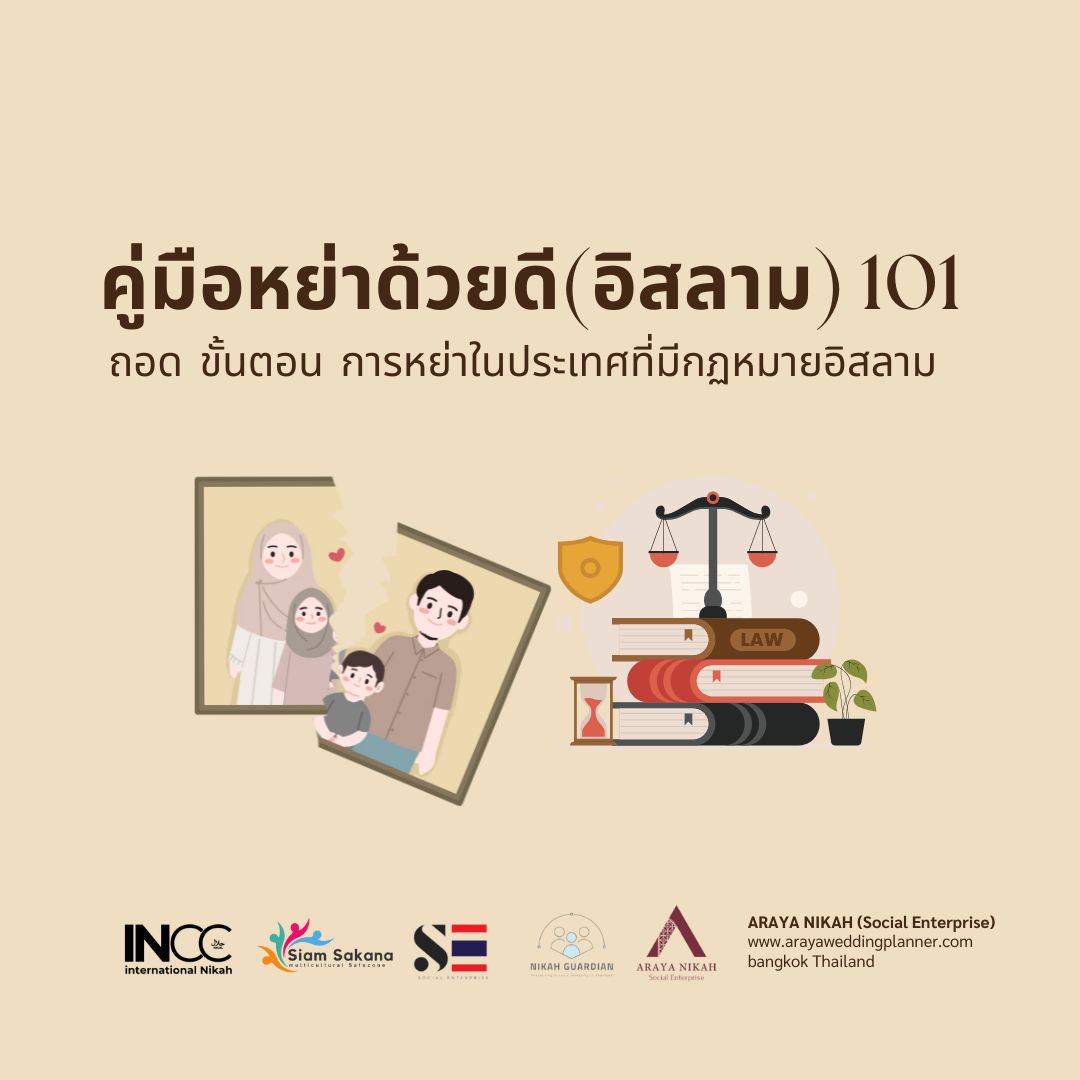
Divorce is a process that can bring major changes to one’s life, but if the law and the procedures are properly understood, this challenging period can be turned into an opportunity for a new beginning. In Islam, divorce is considered permissible but undesirable, and the process has been designed to maintain a balance between legal and religious considerations. This article will guide you through the divorce procedures in Singapore and Malaysia, including the handling of children and inheritance, so that you can understand and plan effectively.
1. Divorce in Islam: Principles and Significance
In Islam, divorce (Talaq) is a “last resort” used when a couple can no longer live together peacefully. Although it is something God permits, it is something that should be approached with great caution. For this reason, the divorce process is designed to protect the rights of both parties, including any children who may be affected.
2. The Divorce Process in Singapore
In Singapore, Muslim divorces fall under the jurisdiction of the Syariah Court, based on the Administration of Muslim Law Act (AMLA). This process focuses on mediation to preserve peace within the family.
Steps of Divorce in Singapore
- Filing the petition:
Either party must file a petition with the Syariah Court along with a clear reason, such as domestic violence or abandonment - Mediation:
The court will refer the couple to mediation or counselling to seek a mutual resolution before proceeding to trial - Court hearing:
The court will rule on the divorce according to the appropriate type, such as:- Talak: a declaration of divorce made by the husband
- Khulu’: a divorce requested by the wife, in return for returning the dowry
- Fasakh: termination of the marriage by court order, due to significant reasons, such as violation of the wife’s rights
Example from Singapore:
In a case where the husband violates a Taklik condition by failing to provide for his wife or by using violence, the wife may file for Fasakh, and the Syariah Court will consider granting the divorce lawfully.
3. The Divorce Process in Malaysia
Malaysia has Islamic family law that differs from state to state, and the Syariah Court plays an important role in hearing divorce cases.
Steps of Divorce in Malaysia
- Notice of intent:
The husband may pronounce Talak, but must report it to the court for the process to be legally complete - Taklik:
The wife may request a divorce if the husband violates a condition, such as abandonment or failure to provide for her - Consideration of Fasakh:
If the wife has reasonable grounds, such as domestic violence, she may request Fasakh to end the marriage
Example from Malaysia:
In a case where the wife is abandoned for several months without reason, she may invoke Taklik and request Fasakh through the court, which will often rule in favor of granting her the divorce.
4. Handling Children in the Divorce Process
Custody
- In Singapore:
The right of custody usually falls to the mother when the child is young (Hadhanah), but the court may grant the father visitation rights or a role in decisions on important matters - In Malaysia:
The court considers various factors, such as the financial and psychological capacity of each parent, as well as the child’s own opinion, if the child is old enough to choose
Child maintenance (Nafkah Anak)
The father has a duty to pay child maintenance regardless of whether the child lives with him. This covers expenses such as food, education, and health.
5. Handling of Inheritance After Divorce
Division of matrimonial property (Harta Sepencarian)
- In Singapore:
Property is divided according to each party’s proportion of contribution, such as income earned outside the home, or care of the family - In Malaysia:
Division of matrimonial property must follow religious principles, with the court considering fairness and each party’s contribution
Children’s inheritance rights
Divorce does not affect a child’s inheritance rights. If either parent passes away, the child still retains inheritance rights over the deceased’s estate under Islamic law.
6. Comparing the Divorce Processes in Singapore and Malaysia
| Topic | Singapore | Malaysia |
|---|---|---|
| Declaration of Talak | Must be filed as a petition to the Syariah Court | The husband may declare it, but must report it to the court |
| Use of Taklik | The wife can invoke Taklik to request Fasakh | It is legally binding from the day of the nikah |
| Custody | The mother is usually granted custody of young children | The court considers what is appropriate and the child’s own opinion |
7. Key Lessons from Divorce in the Two Countries
Both Singapore and Malaysia use laws that blend religious principles with modern law to protect the rights of spouses and children. A process that emphasizes mediation and fairness helps reduce conflict and protect the interests of all parties.
Closing Thoughts: Divorce as a Path to a New Life
Divorce is not an ending, but an opportunity for a new beginning. When carried out with understanding and respect for everyone’s rights, the divorce processes in Singapore and Malaysia show the importance of using the law to strike a balance between religion and justice, all for the peace of the family and of society as a whole.
About Us:
ARAYA Nikah Planner & Consult Co., Ltd. is ready to provide consultation on Islamic divorce, the handling of children, and the management of property. Visit our website www.arayaweddingplanner.com for more information.
Terms and Meanings: Expanding on Key Terms in This Article
To help readers understand the article more clearly, below are the key terms used in the article along with brief explanations:
- Talaq:
The divorce declared by the husband to end a marriage according to Islamic principles, which must follow the conditions set by the religion, such as not being in a state of anger or under duress. - Khulu’:
The divorce requested by the wife, whereby she agrees to return the dowry or a portion of the property to the husband, in order to end the marriage. - Fasakh:
The divorce arising from a petition by either party, in which the court decides to end the marriage due to reasonable grounds, such as a violation of rights, abandonment, or failure to fulfill duties. - Taklik:
An agreement or promise made by the husband at the time of marriage. If the husband violates the agreement, the wife may cite it in court to request a divorce. - Syariah Court:
The court with authority to hear cases relating to Muslim families, such as divorce, child custody, and division of matrimonial property. - Nafkah:
The maintenance that the husband must pay to his wife or children after a divorce, covering basic expenses such as food, education, and health. - Harta Sepencarian:
Property acquired during the marriage, which will be divided as appropriate after the divorce. - Hadhanah:
The right to custody of children, which is usually granted to the mother when the child is young, unless the court decides otherwise.
These terms are essential to a deeper understanding of the Muslim divorce process and Islamic law.
You must be logged in to post a comment.