
Lessons from the History of KFC and the Halal Mark in Thailand A Life Guide for Muallaf (New Muslims) 101
Those interested in Islam or new Muslims may have heard about the issue of KFC in Thailand, including debates over whether it can be eaten. Today, ARAYA NIKAH will walk you through this topic.
Is KFC Halal?
In many countries, KFC is halal-certified in order to comply with Islamic principles and meet the needs of Muslim consumers — for example, in Malaysia, Indonesia, Singapore, and Brunei, where it is certified by the religious authorities of each respective country, as well as in Saudi Arabia, where it is certified by the country’s religious authority. However, in some countries, such as the United Kingdom, although some branches are certified halal by the Halal Food Authority (HFA), there remains debate and uncertainty among Muslim consumers.
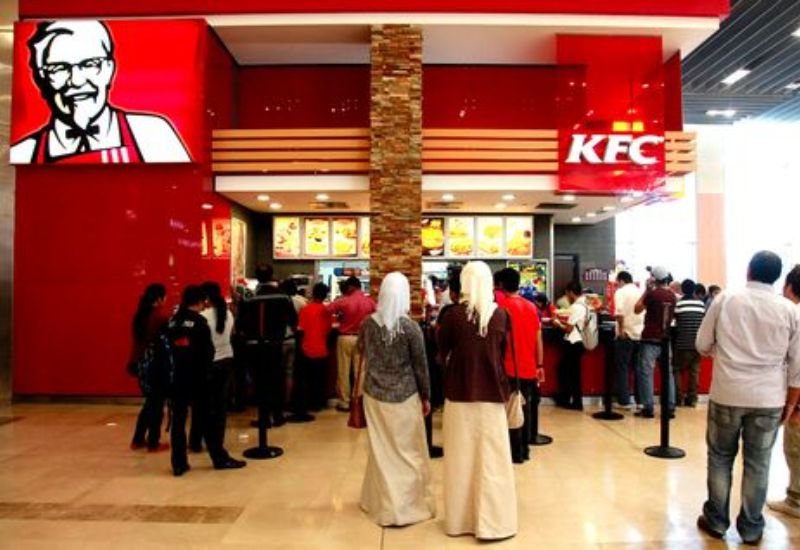
Why Doesn’t KFC Thailand Seek Halal Certification?
According to available information, KFC in Thailand was once halal-certified at some branches, such as in Phuket and Krabi provinces. However, the Central Islamic Committee of Thailand changed its policy on halal certification for franchise businesses, requiring all KFC branches nationwide to be certified together as a single group rather than certifying individual branches separately. This led KFC to not renew that certification.
Can You Eat KFC That No Longer Renews Its Halal Mark?
Thai Franchise Center reported that Mr. Paisan Promyong, chairman of the Islamic Committee of Samut Prakan Province and former chairman of the Halal Affairs Committee of the Central Islamic Committee of Thailand, revealed on the NEWTM CHANAL television station some years ago regarding the KFC halal issue, emphasizing that without halal certification, KFC cannot be said to be either halal or haram — consumers must use their own judgment to decide.
If Thai KFC Changed Its Mind and Sought to Renew Halal Certification, Would That Be Possible?
Thai Franchise Center reported that, according to a resolution of the Central Islamic Committee of Thailand at a meeting at the Graceland Ann Resort & Spa, Phuket, on 29 May 2014, renewal would require a “new round of negotiations,” under which KFC and its franchise would have to seek halal certification for the entire nationwide system only — certification and use of the halal mark would not be granted otherwise — and fees could be adjusted as appropriate by province and Muslim population density.
How Much Did It Cost KFC to Get Halal Certification Back Then?
Independent media reported that, because halal certification fees from the Islamic Committee are charged per visit as well as monthly and annually, calculated separately per branch, obtaining halal certification for every KFC branch (approximately 500 branches) nationwide would cost an additional estimated 25 million baht per year.
However, if certification were sought only for areas with a dense Muslim population and tourist provinces, the cost might be only about 5 million baht per year — a saving of about 20 million baht per year. This is one reason KFC has not pursued the matter seriously.
If KFC Sought Halal Certification Today (B.E. 2568 / 2025), Roughly How Much Would It Cost?
Based on an estimate using current fee figures and approximate branch numbers (all figures are estimates), if KFC entered the halal system today and sought certification for every branch in Thailand — approximately 1,000 branches — based on current fees with no discount, the total cost would be approximately 47,000,000 baht per year, consisting of a large-establishment inspection fee of 35,000 baht per branch (totaling 35,000,000 baht) and an annual consulting fee of 12,000 baht per branch (totaling 12,000,000 baht). This does not include additional fees for using the halal mark on products. This calculation is a preliminary estimate based on current fees and does not account for any discounts that may apply in an actual case (fee reference: Central Islamic Committee of Thailand Office, n.d., Regulations on Halal Certification).
Is It True That KFC Chicken Is Made with Pork Fat and Lost a Lawsuit Abroad?
There has been widespread news claiming that KFC lost a lawsuit abroad involving pork-derived fat. However, upon investigation, this news turns out to be false. The actual case was a lawsuit between a KFC franchisee and KFC headquarters over the use of a halal mark in advertising. The franchisee, owned by a Muslim, had used a halal mark for 14 years, but was prohibited from using it by headquarters due to international legal issues. The lawsuit ended with the franchisee losing, and it had nothing to do with non-halal ingredients whatsoever.
KFC: Opinions and Issues Behind Bans in Some Countries
KFC, a global fast-food brand operated by Yum! Brands in the United States, is popular in many countries, but various media outlets have reported that the company has been banned or faced boycotts in some areas for political and cultural reasons.
According to reports by Middle East Eye and Al Jazeera, in the Palestinian territories, some segments of the population have campaigned to boycott American brands, including KFC, on the grounds that these brands may be indirectly linked to supporting Israel’s economy. This campaign has not been limited to the Palestinian territories but has also extended to Muslim communities in other areas who are aware of these issues.
In Iran, CNN reported in 2016 that KFC was banned in some areas because local authorities viewed the brand as a symbol of Western culture inconsistent with the country’s cultural values. In addition, in Iraq, some armed groups have previously shut down KFC outlets for political reasons.
In Malaysia, although KFC is popular and widely operated, the company has at times faced criticism and online campaigns by some consumer groups. For example, a report from Free Malaysia Today noted calls to boycott KFC due to concerns about its funding sources and global ties to groups perceived as unfriendly to Muslims — even though KFC in Malaysia is halal-certified and operates closely with local communities. Campaigns of this kind reflect consumer sensitivity around a brand’s origins and global relationships.
In Egypt, according to a report by The New York Times, KFC outlets in some areas were temporarily closed following protests related to the country’s political situation. These issues reflect how multinational brands become entangled in complex political and social matters.
Although these issues do not affect KFC in every country, the fact that the brand has been banned or boycotted in some areas reflects the challenges multinational companies face across different cultural and political environments.
The Islamic Committee Encourages Consuming Halal-Certified Food
The Islamic Committee encourages the consumption of halal-certified food, because halal food is food that is permitted under Islamic law for Muslims to consume or use. Consuming halal-certified food gives Muslims confidence that the food is free from forbidden (haram) substances and meets proper hygienic food-quality standards. In addition, choosing halal-certified food is consistent with Islamic principles, which require Muslims to follow what is permitted (halal) and avoid what is forbidden (haram). Consuming halal-certified food is therefore both a religious practice and a way of supporting Muslims’ good health.
Thailand has a strict and systematic halal standard process to ensure that halal-certified products comply with Islamic principles and meet high quality standards. The halal certification process in Thailand consists of several steps, from submitting an application, inspecting the establishment, analyzing raw materials and production processes, to monitoring and evaluation after certification. Thailand’s halal standard is internationally recognized, making Thai halal products credible and competitive in the global market. In addition, compliance with halal standards helps promote product safety and quality, which benefits all consumers, not only Muslims.
Summary: Can Muslims Eat KFC?
Based on all the information above, KFC is halal-certified in several countries, such as Malaysia, Indonesia, and Saudi Arabia, but in Thailand, KFC does not currently hold official halal certification, due to a policy change by the Islamic Committee of Thailand and KFC’s decision not to renew that certification. Since there is currently no system in place to inspect the production, delivery, storage, and other processes, consumers should use their own judgment in deciding and take responsibility for their own decision.
References
- Al Jazeera. (n.d.). Palestinian call to boycott US brands. Retrieved from https://www.aljazeera.com
- CNN. (2016). KFC banned in Iran for promoting Western culture. Retrieved from https://www.cnn.com
- Courthouse News. (n.d.). KFC franchisee loses fight to market chicken as Muslim-friendly. Retrieved from https://www.courthousenews.com
- Free Malaysia Today. (n.d.). KFC faces online boycott over global ties. Retrieved from https://www.freemalaysiatoday.com
- Middle East Eye. (n.d.). Boycotts in the Middle East: The Palestinian perspective. Retrieved from https://www.middleeasteye.net
- Thai Franchise Center. (n.d.). History of KFC and Halal in Thailand. Retrieved from http://m.thaifranchisecenter.com/show_document.php?ID=7325
- The New York Times. (n.d.). KFC outlets close in Egypt amid political protests. Retrieved from https://www.nytimes.com
- National Bureau of Agricultural Commodity and Food Standards. (n.d.). Halal Food. Retrieved from https://www.acfs.go.th/halal/general.php
- National Bureau of Agricultural Commodity and Food Standards. (n.d.). Halal Standard Certification. Retrieved from https://www.acfs.go.th/halal/halal_cert.php
- Halal Standard Institute of Thailand. (n.d.). Thailand’s Halal Standard in the Global Market. Retrieved from https://www.halalstandard.or.th
- https://www.caterermiddleeast.com/
- https://www.mtoday.co.th/35524
- Independent media Facebook post https://www.facebook.com/photo/?fbid=340274136407140&set=a.148060392295183
You must be logged in to post a comment.