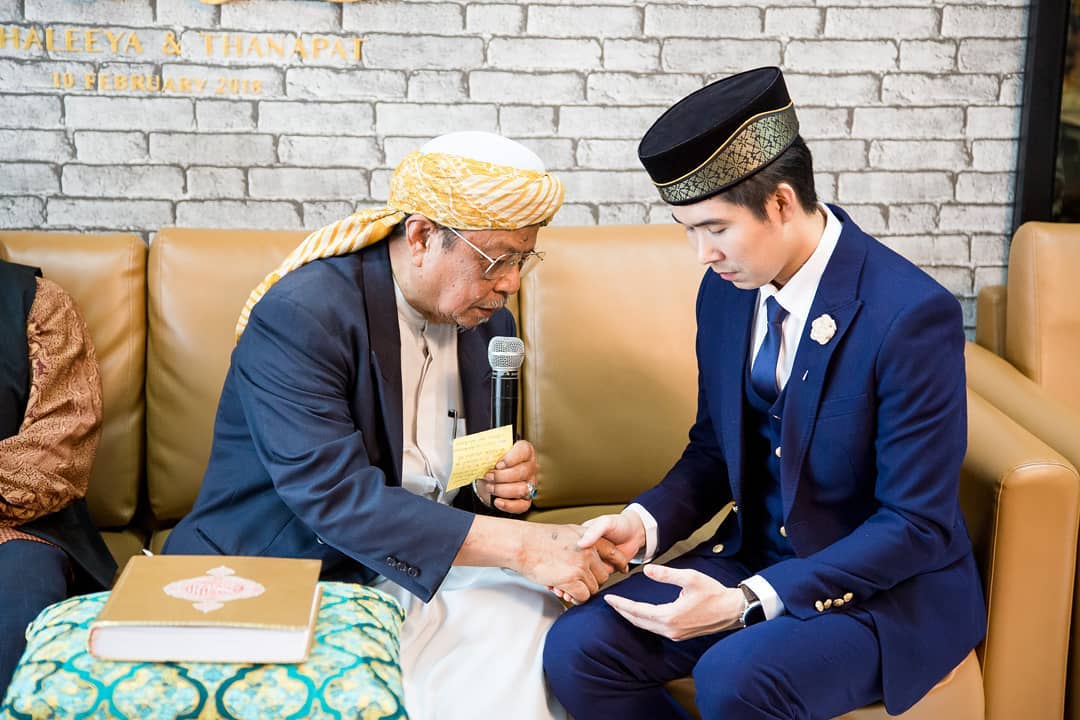
Giving the sermon (khutbah) at an Islamic wedding, at the Nikah, is one of the important activities that takes place during the Islamic wedding process. The sermon aims to give the couple knowledge, perspective, and principles for married life, so they understand their duties, their rights toward each other, and the virtues they should hold toward one another, so that this soon-to-be-formed family will have peace according to Islamic principles.
This topic covers
- Why the Nikah sermon matters so much
- Problems from an unpleasant sermon
- Qualities of the person giving the sermon at a Nikah for a family of a different faith
- Order of the sermon at a Nikah for a family of a different faith
- Conclusion
Why This Sermon Has Become So Important
What’s interesting is that giving the Nikah khutbah for an audience that includes new Muslims and non-Muslims — especially when a family from either side that does not follow Islam is present — calls for an important art that requires extra care and attention, due to differences in religion, culture, belief, and feelings of liking or disliking these religious differences. Considering this from many angles, this khutbah is important not only for helping the couple understand the principles of married life according to Islam, but also for adjusting overall understanding and building good rapport between two families of different faiths.
Looking carefully, in many such Islamic weddings, this may be the first and only occasion where a family that does not follow Islam will listen attentively to what Islam teaches, because their son, nephew, daughter, or niece is about to marry into a life lived according to Islamic principles, converting to become Muslim. This sermon therefore becomes even more important, as it can lead either to good understanding or to a rift within the family.
Considering this according to the book Crucial Conversations (Kerry Patterson), giving the Nikah sermon contains all the key elements of such a conversation, namely
- Listeners hold differing views, from different religious cultures and beliefs
- This listening carries high stakes and major change — for example, a daughter changing culture, or a son marrying someone of a different culture
- Strong emotions are present (excitement, anxiety, anger, overflowing happiness)
These elements confirm that this communication is a critical moment of communication for both families, and the person giving the sermon represents the family in communicating to everyone present.
Problems from an Unpleasant Sermon
However, it is commonly found that at mosques, homes, or other venues, this activity ends up failing or not being as successful as it should be — for example, problems arising from a sermon style that assumes every listener is Muslim (or that even non-Muslims must listen as if they were), bias against listeners of a different faith, elevating Islam by putting down other religions during the sermon, bias held by the person giving the sermon toward people of other faiths, bias and distrust toward a spouse from a different religion, even going off-topic to bring up third-gender issues, politics, or other unrelated matters, or even boasting about oneself. All of this leads to misunderstanding and rifts within the family — a relationship that was once very good ends up damaged, by a speaker who spoke for less than fifteen minutes.
To avoid this unpleasantness, I have developed the following approach for a good sermon-giver, for couples who are new Muslims with a family of a different faith attending.
Qualities of the Sermon-Giver, for an Audience and Family of New Muslims
First, choosing the person to give the sermon must be someone we are confident holds, deep in their subconscious, no bias against people of other religions, and does not think they alone are righteous. They must be friendly, honor those who follow other religions as well as those who follow no religion, and not judge others who are not Muslim. This underlying respect from the subconscious cannot be faked or hidden — if the sermon-giver harbors even a small judgmental attitude toward other people or other religions, the overall atmosphere will suffer as a result. Good manners and good morals are the essential first requirement.
Second, the sermon-giver must have good knowledge and understanding of Islamic principles, including the goals of marriage, good married life according to Islamic principles, and the rights and duties of each party, and must have the art of communicating this important content concisely, with broad knowledge and experience on married life and marriage, so that the message reaches the audience appropriately.
Third, the sermon-giver must understand well the concerns of the elders on the non-Muslim side, what those concerns are, and must equally understand the concerns of the elders on the Muslim side, so as to be able to speak on behalf of both families and help ease those concerns.
Order of the Sermon at a Nikah, for a New Muslim Family
The sermon steps I have designed, which have produced good results, are as follows:
1. Establish the main goal of this communication — even though the two families may hold differing views, both families share one common goal: for the couple to have a peaceful married life. It should therefore begin with the goal of Islamic marriage according to the following ayah of the Quran
وَمِنْ ءَايَـٰتِهِۦٓ أَنْ خَلَقَ لَكُم مِّنْ أَنفُسِكُمْ أَزْوَٰجًۭا لِّتَسْكُنُوٓا۟ إِلَيْهَا وَجَعَلَ بَيْنَكُم مَّوَدَّةًۭ وَرَحْمَةً ۚ إِنَّ فِى ذَٰلِكَ لَـَٔايَـٰتٍۢ لِّقَوْمٍۢ يَتَفَكَّرُونَ ٢١
(30:21) And of His Signs is that He has created mates for you from your own kind28 that you may find peace in them29 and He has set between you love and mercy.30 Surely there are Signs in this for those who reflect.
[21] And of His Signs is that He created for you mates from among yourselves, that you may find peace in them, and He placed between you love and mercy. Indeed, in that are signs for a people who reflect.
Quran 30:21
2. Greet the guests of every religion, express welcome, connect the two families even though they follow different faiths, address the concerns of the elders on each side with empathy and tact, as well as mention the couple’s continuing duty to care for relatives on both sides even better than before.
3. Speak about the religious principles, the elements of marriage, and the rights and duties each party owes the other.
4. Briefly speak on the art of married life, drawing on present-day knowledge or the historical art of married life according to Islamic principles, touching on beginning married life together and facing tests together, sharing both hardship and happiness.
5. Close by returning once more to the goal of Islamic marriage, reminding everyone that if love and mercy toward one another are absent, it is a sign that we are heading down the wrong path, then offer blessings to the couple and their families.
It should be delivered concisely, without being drawn out, appropriate to the guests present as listeners, and effort should be made to keep the atmosphere friendly and not overly formal — warm, as if it were a family gathering.
Conclusion: Giving the Nikah Sermon for a Family of a Different Faith
All of the above is the approach and art of giving a sermon that ARAYA Nikah Planner and Consult has tested and found to work very well for families where religious backgrounds differ. Honoring one another, not judging, and passing on goodness to each other — all of this is the duty of the sermon-giver, and it brings about goodness at an Islamic wedding involving a family of a different faith, helping the non-Muslim side understand the way of life and the goals of married life for Muslims, while also helping the existing Muslims revisit the goal of marriage — namely, expressing love and mercy toward one another between the couple, and that marriage in Islam creates a family where the man and woman can design their own safe space in their own way.
I hope these thoughts will be useful to those who serve as the sermon-giver at an Islamic wedding.
Planning a legally-recognized Nikah in Thailand? Start here →
You must be logged in to post a comment.