
–This article covers–
01 Formats of Islamic wedding catering
02 Islamic wedding food from the past to today
03 Islamic wedding food menus
04 Islamic wedding planning system
05 Islamic wedding food in the COVID-19 era
What should be served at an Islamic wedding? What should be included? What are the guiding principles and customs? The Nikah Planner team by Araya will walk you through it. Catering for guests attending our events, whether it’s the reception after the nikah ceremony ends or the celebration day (walimah), tends to look similar, and there is no fixed rule or set standard. What matters most is that it is correct according to religious principles and appropriate to the means of the host, without creating hardship or debt afterward. Next comes having enough for the invited guests, and finally, that it suits the taste of the host and guests to a reasonable degree. As for exactly which menu items to include, that depends on the catering format as well as local culture.
Formats of Islamic wedding catering
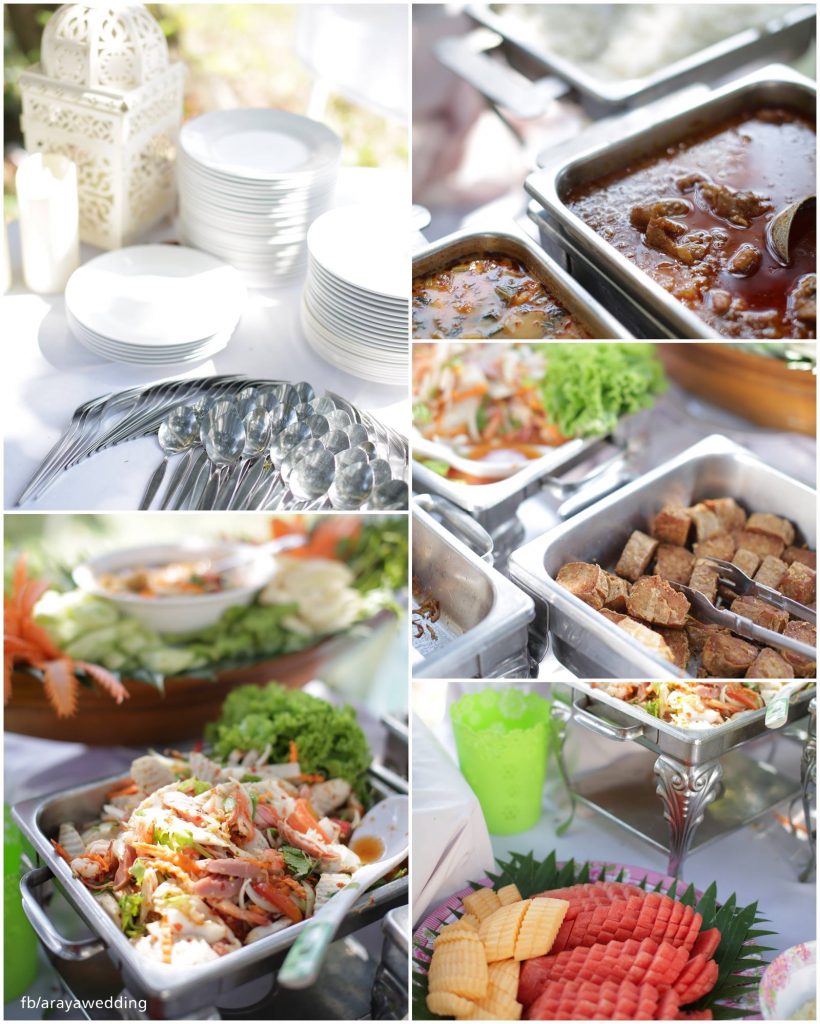
Catering at Islamic weddings tends to follow similar formats: Islamic Chinese-banquet-style catering, Islamic buffet catering, or Islamic set-menu catering. Cocktail-style service is not yet very popular at present, but it may increase over time as trends change.
Islamic wedding food from the past to today
From the past up through part of today, Islamic wedding food was commonly served as set menus. When guests arrived and were seated at a table, young helpers — sometimes relatives, sometimes students from nearby schools brought in to help — would serve the table, with catering continuing throughout the day. Today, this style of catering has become less common, while Islamic buffet catering and Islamic Chinese-banquet-style catering have become more common in line with current trends, since they help add convenience and reduce the burden of organizing on the host’s relatives.
Related article: Example of an Islamic wedding
Islamic wedding food menus
Islamic wedding food menus include savory dishes, desserts, and beverages, which vary from place to place. The most popular menu items typically included at these events are beef dishes, such as beef massaman curry, beef soup, and the like, in cases where the aim is to make the menu we prepare bring even more enjoyment to those attending.
The technique for planning the menu is also important — the range of food types should be spread out well, covering different types of meat, different cooking methods, spicy versus non-spicy options, and format. For example, if most of the guests at the event are elderly, choosing food that’s hard to chew or overly spicy in large proportion would not suit them, whereas if a fairly large number of children are attending with our guests, fried foods and easy-to-grab desserts like slices of cake tend to be popular.
Islamic wedding food planning system
Today, the Araya team has brought the concept of food planning into the Nikah Planner service as well, through an online system that brings Islamic catering menus into the system, organized neatly and made easy to choose from, together with all necessary guidance. The host can choose menu items from one place, all at the same time, no matter whether family members are in different provinces or different locations. It’s another tool prepared for the couples the team looks after.
Islamic wedding food in the COVID-19 era
COVID-19 has changed the format of weddings for at least a year or two going forward, including the catering format as well. Eating in public settings, weddings included, directly increases risk. The team is aware of the importance of this issue and has therefore designed a specific catering format: Islamic boxed-set catering, or special boxed meals. What makes it interesting is making the boxed meal feel more special than an ordinary boxed meal while still giving the feeling of Islamic wedding food. In addition, further concepts have been developed, such as Islamic wedding food delivered directly to the door.
Conclusion
As mentioned above, Islamic wedding food has no fixed requirements. The type of food mostly follows local custom, according to the host’s means, with the additional important point being that the food must be halal — this is an essential matter.
You must be logged in to post a comment.