
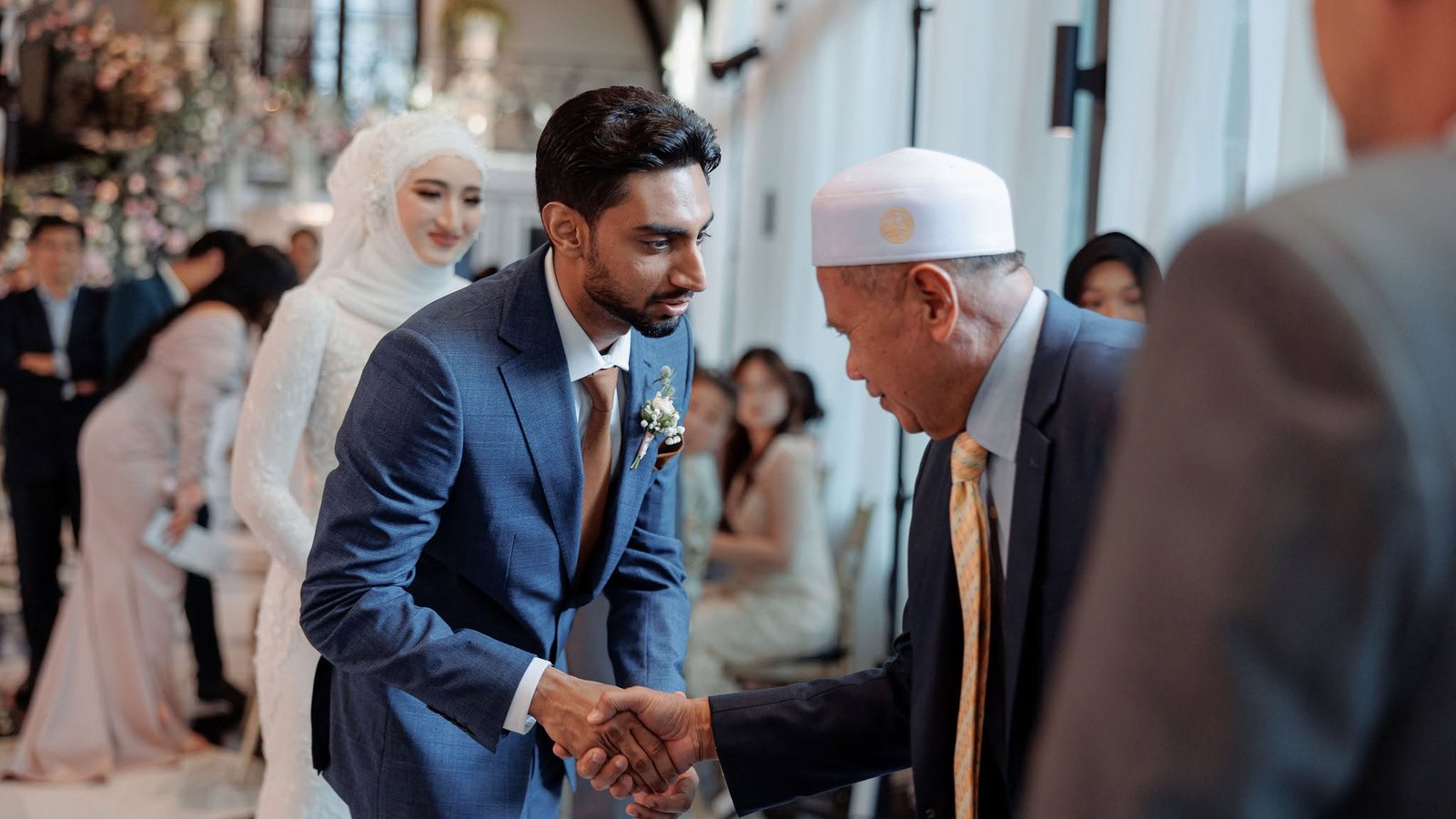
An Islamic marriage (nikah) in Thailand requires a wali — the bride’s guardian, who holds the right and duty to give consent for her and protect her throughout the ceremony. This is ARAYA’s master guide to the wali: who may serve as wali, in what order; every option when there is no wali in that order; the documents you need; and the ARAYA policy that protects both the bride and her family’s privacy. (อ่านหน้านี้เป็นภาษาไทย)
Who is a wali, and why does it matter?
The wali (bride’s guardian) is the person with the right and duty to give consent and protect the bride during the marriage. Usually this is a Muslim family member, following a fixed order of precedence. The wali acts as the bride’s representative to ensure the marriage follows Islamic principles honestly and safely for her.
The wali’s main responsibilities:
- Advice and approval — the wali advises the bride and approves her choice of partner
- Confirming the bride’s consent — before the ceremony, the wali speaks with the bride to confirm her willingness, without coercion
- Giving consent in the ceremony — the wali gives his own consent as the marriage contract requires, alongside the bride’s own personally confirmed consent
- Protecting the bride’s rights — the wali checks that the groom is qualified to care for the family under Islamic principles
The order of the wali — from closest, down to the last resort when there is no one
The order below runs from the closest family right-holder down to ARAYA’s arrangement for when no one in that order is available. It follows ARAYA’s original article exactly, with no change to the precedence.
Note: tiers 1–6 are the religious order of precedence (fiqh), exactly as in ARAYA’s original article. Tiers 7–8 are not a religious ruling — they are ARAYA’s own operational arrangements for when no one in the religious order is available. Always confirm the details with ARAYA’s scholars before the ceremony.
The wali’s documents, and joining online
- The wali’s documents: a copy of the bride’s guardian’s ID card or passport (may be submitted online)
- The wali may join online — for the non-legally-effective path, the wali does not need to travel in person; an online meeting with the guardian can appoint a marriage representative (wakil)
- Full document list by route: see our nikah document checklist for the complete list under both routes (legal / religious)
ARAYA policy: someone else always knows, personal consent, and no secret nikah
The one rule — every nikah has someone who knows and can check on the woman’s side. The closer that person is to her, the more privacy you keep: her own wali (closest → fully private) → two female relatives (near → private) → the public (farthest → public by nature). No wali or relatives of your own? ARAYA arranges a wali hakim, under the conditions set out in the order above.
The wali supports — the bride confirms consent personally — per ARAYA policy, learning carries no obligation, and consent to marry must always be confirmed by the bride herself, in person. Family or a wali may support her, but they cannot substitute for her own consent. Every decision is hers.
No secret nikah — ARAYA’s role is to conduct your nikah properly within Thailand’s legal framework only. Every marriage must have someone who knows and can check, plus proper documentation — no marriage proceeds that no one can check. Read the full details in our Privacy & Transparency Policy.
Related Reading
- Document Checklist (English) — full documents for both routes
- เช็คลิสต์เอกสารนิกะห์ (ไทย)
- Privacy & Transparency Policy (English)
- นโยบายความเป็นส่วนตัวและความโปร่งใส (ไทย)
Not sure who should be your wali, or have no wali at all? Chat with ARAYA on WhatsApp and we’ll guide you honestly through every step.